The ocean remains one of Earth's biggest data blind spots, and Apeiron Labs just raised $9.5 million to change that. The startup closed a Series A led by Dyne Ventures, RA Capital Management Planetary Health, and S2G Investments to scale production of compact autonomous underwater vehicles that capture subsurface ocean data at a fraction of traditional costs. While satellites have mapped surface conditions extensively, what happens below 400 meters stays largely hidden - until now. Apeiron's bobbing robots could unlock persistent ocean monitoring for everyone from fisheries to the Pentagon.
Apeiron Labs just pulled off something rare in climate tech - making ocean data collection actually affordable. The startup closed a $9.5 million Series A to flood critical waters with autonomous robots that cost a fraction of traditional ship-based expeditions.
The round, led by Dyne Ventures, RA Capital Management Planetary Health, and S2G Investments, comes as demand for subsurface ocean data explodes across industries. Assembly Ventures, Bay Bridge Ventures, and TFX Capital joined the raise, which the company exclusively revealed to TechCrunch.
Founder and CEO Ravi Pappu knows the ocean data problem intimately. As former CTO of In-Q-Tel, the CIA's venture capital arm, he watched the intelligence community struggle with a persistent gap - nobody had affordable access to what's happening below the surface. "Getting data from the subsurface ocean has always been really hard," Pappu told TechCrunch. "It's really slow. You need a ship that costs $100,000 a day, steams out slowly. Everything's an expedition."
Satellites revolutionized surface monitoring, but water blocks most remote sensing tech. That leaves fisheries, meteorologists, offshore wind developers, and Coast Guard operations flying partially blind. NOAA currently relies on buoys, ships, and a handful of autonomous rovers according to published research, but coverage remains spotty and expensive.
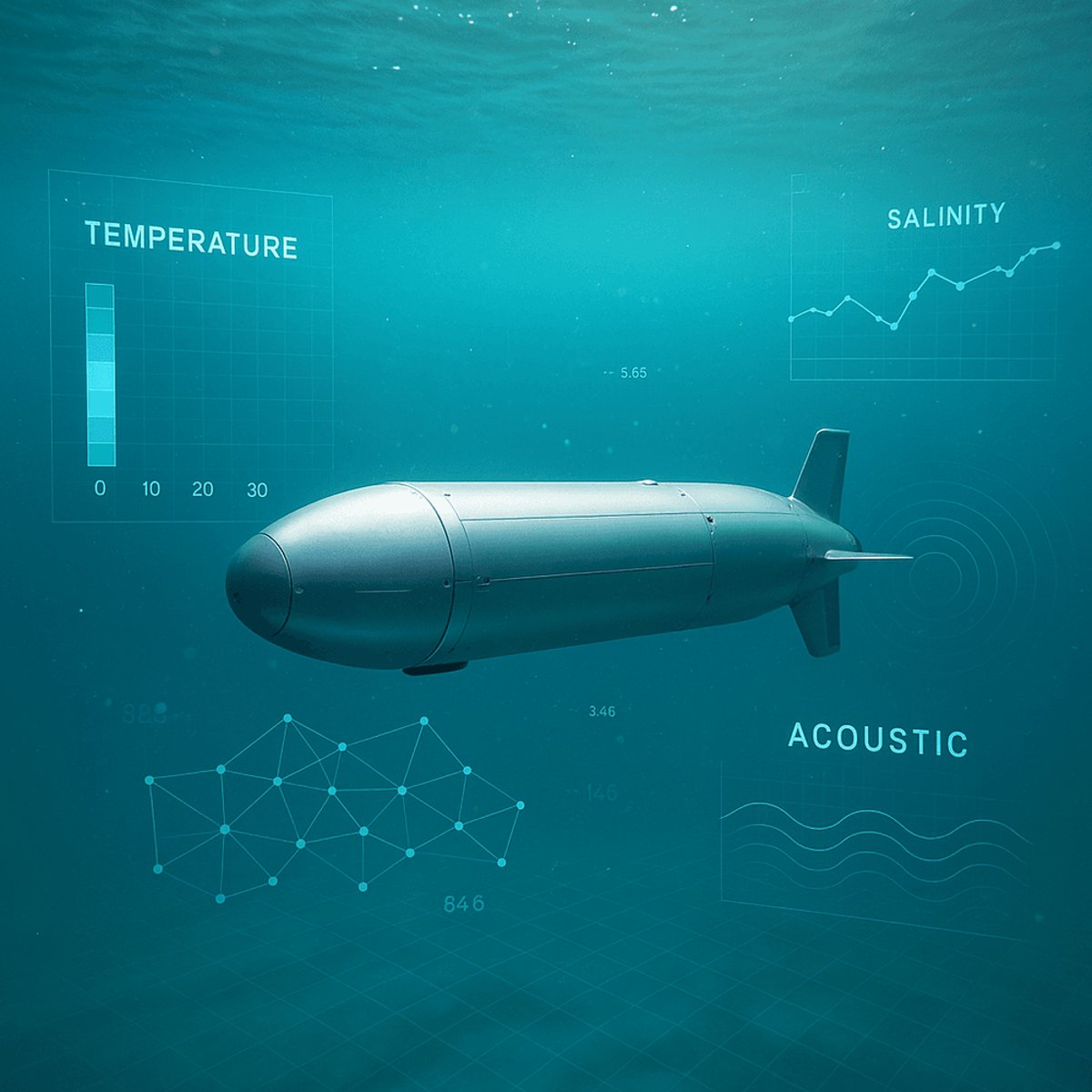
Apeiron's solution looks deceptively simple. The startup builds 3-foot-long, 5-inch-diameter autonomous underwater vehicles weighing just over 20 pounds. Each AUV dives up to 400 meters, sampling temperature, salinity, and acoustics once or twice daily before surfacing to transmit data via cloud-based operating systems.
The design choices matter. At that size and weight, Apeiron's AUVs can deploy from boats or airplanes - and they fit perfectly into existing U.S. Navy launch equipment. That's not coincidental for a founder who cut his teeth in defense tech. Pappu told TechCrunch the company already sells to both civilian and defense customers.
The real innovation lives in the software. When an AUV dives, Apeiron's cloud platform uses ocean models to predict where it'll surface. Each time the robot breaches and reconnects, it feeds fresh data back into those models, continuously refining predictions. Deploy these in arrays spaced 10 to 20 kilometers apart, and you get subsurface resolution that traditional ship-based sampling can't match.
Pappu's ambitious about scale. He envisions deploying dozens or hundreds of AUVs for different customers. The Pentagon might run arrays listening for submarines off U.S. coasts. Fisheries could track temperature and salinity shifts in prime waters. Offshore wind developers need subsurface current data. Everyone wants persistent monitoring, but nobody could afford it before.
The economics tell the story. At current production scale, Apeiron has already slashed ocean data costs by 100-fold compared to ship expeditions. Pappu thinks they'll hit 1,000-fold cost reduction by 2027. "We think of ourselves as the CubeSat for the ocean," he told TechCrunch, referencing the tiny satellites that democratized space data.
That CubeSat comparison isn't just marketing. The small satellite revolution proved that massive constellations of cheap, specialized sensors beat expensive, single-purpose missions for many applications. Apeiron's betting the same dynamic plays out underwater.
The Series A capital will fund manufacturing scale-up and expanded deployments. Founded in 2022, Apeiron has moved quickly from concept to commercial sales, but the ocean monitoring market is just opening up. Climate change is shifting marine ecosystems, offshore renewable energy is booming, and defense spending on autonomous systems keeps climbing.
Competitors exist - companies like Saildrone and Liquid Robotics build surface vehicles, while traditional underwater robotics firms focus on deeper, more expensive platforms. But Apeiron's targeting a sweet spot: shallow enough for frequent surface communication, cheap enough to deploy in volume, and standardized enough to integrate with existing infrastructure.
The funding environment for climate tech hardware remains challenging, but ocean technology is seeing renewed investor interest as data gaps become more obvious. S2G Investments has backed multiple climate-focused startups, while RA Capital's Planetary Health initiative specifically targets environmental monitoring technologies.
For Pappu and his team, the next 18 months will test whether they can scale manufacturing fast enough to meet demand while hitting that 1,000-fold cost reduction target. The technology works - now it's about volume production and proving the business model at scale.
Apeiron Labs is making a bet that ocean data follows the same path as space data - from expensive expeditions to cheap, ubiquitous sensors. If Pappu hits his cost reduction targets, the startup could unlock entirely new markets for subsurface monitoring while giving existing customers like the Navy and commercial fisheries capabilities they couldn't afford before. The $9.5 million Series A gives Apeiron runway to prove whether persistent ocean monitoring at scale actually works, or if the operational challenges of managing hundreds of autonomous robots in harsh marine environments will sink the economics. Either way, the next year will determine whether we finally get the subsurface data infrastructure the ocean has always needed.