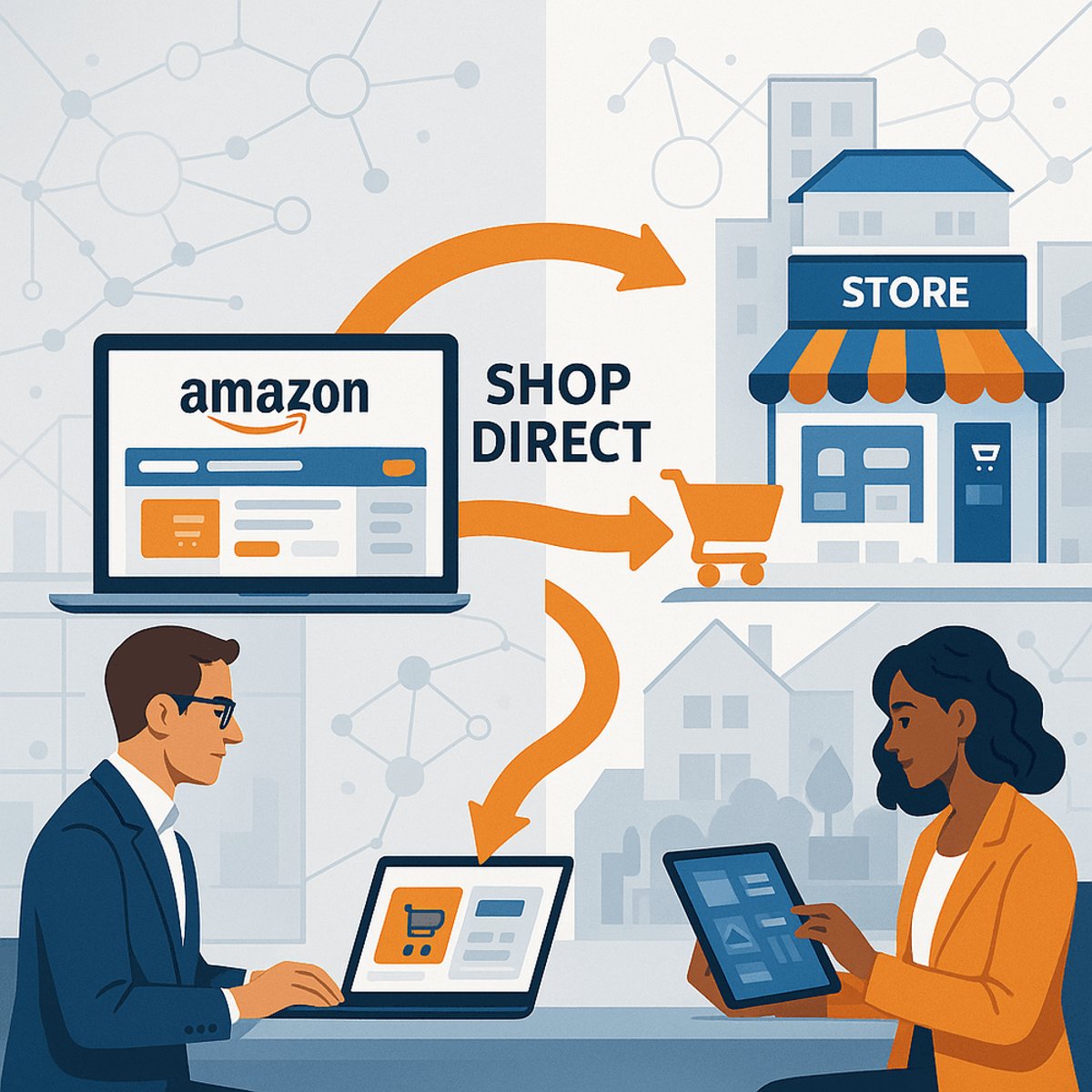
Amazon is dramatically expanding its Shop Direct program, opening the doors for more merchants to redirect Amazon customers to their own websites - a surprising shift for a company that's spent decades keeping shoppers locked inside its ecosystem. The move signals Amazon's evolving strategy in the competitive e-commerce landscape, where the retail giant is betting it can profit from transactions it doesn't directly control.
Amazon just made a move that would've been unthinkable a few years ago. The e-commerce giant is expanding its Shop Direct program, which does something Amazon historically avoided at all costs - it sends customers away from Amazon.com to shop on other retailers' websites.
The expansion, reported by TechCrunch, opens the program to more merchants who want to leverage Amazon's massive customer base without actually selling through Amazon's marketplace. It's a fundamental shift in how the Seattle-based company thinks about commerce.
Here's what's happening: merchants can now list products on Amazon that, when clicked, redirect shoppers to complete their purchase on the merchant's own site. Amazon presumably takes a referral fee, though the company hasn't disclosed specific terms. For Amazon, it's found money from transactions that would've happened off-platform anyway. For merchants, it's access to Amazon's 200+ million Prime members without paying marketplace fees or dealing with Amazon's fulfillment requirements.
The timing is telling. Amazon has faced mounting pressure from independent retailers who want the traffic but not the strings attached. Brands have increasingly moved toward direct-to-consumer models, and platforms like Shopify have made it easier than ever to operate independent storefronts. Shop Direct looks like Amazon's answer - if you can't beat them, redirect them.
What makes this expansion particularly intriguing is how it intersects with the rise of agentic commerce and AI-powered shopping assistants. As consumers increasingly rely on AI agents to find and purchase products, the walls between different e-commerce platforms start to matter less. Amazon seems to be positioning itself as a discovery layer that sits on top of the broader retail ecosystem, rather than just another walled garden.
The program was initially launched with limited partners, but the expansion suggests Amazon sees real potential. Merchants get to maintain their customer relationships and data, something Amazon typically guards jealously. They can offer exclusive products or bundles not available through Amazon's standard marketplace. And they avoid the race-to-bottom pricing that often characterizes selling on Amazon proper.
For traditional Amazon sellers, this creates an interesting dilemma. Do they stick with Fulfillment by Amazon and compete on Prime shipping speed? Or do they migrate to Shop Direct, maintain higher margins, but lose the trust signals that come with Prime badges and Amazon's A-to-Z guarantee?
The competitive implications ripple across the industry. Shopify has spent years building its merchant ecosystem and positioning itself as the anti-Amazon. Now Amazon is essentially saying "bring your Shopify store - we'll send you traffic." Google Shopping has played in this referral space for years, but never with Amazon's conversion power. Even Meta's shopping features look different when Amazon decides to become a traffic source rather than just a destination.
There's also a regulatory angle here. As antitrust scrutiny intensifies around big tech platforms, Amazon can point to Shop Direct as evidence it's not trying to monopolize all commerce - it's enabling competition. Whether regulators buy that argument remains to be seen, but it certainly doesn't hurt Amazon's case.
The challenge for merchants will be conversion. Amazon's checkout is frictionless for Prime members - one click and you're done. Sending customers to an external site introduces friction, even if it's just a few seconds of extra loading time. Merchants will need compelling reasons for customers to complete that journey: exclusive products, better prices, or unique experiences that Amazon's sterile interface can't match.
What Amazon hasn't said is how prominently Shop Direct listings will appear in search results compared to traditional marketplace offerings. That algorithm tweak could determine whether this is a real alternative for merchants or just a marginal program. If Shop Direct listings rank lower, merchants won't bother. If they rank equally, Amazon's own retail operation might suffer.
The expansion also comes as Amazon pushes deeper into advertising. Merchants using Shop Direct likely pay for prominent placement, turning Amazon into something closer to a performance marketing platform. That's a higher-margin business than retail, and one that doesn't require Amazon to hold inventory or handle returns.
Amazon's Shop Direct expansion reveals a company adapting to a more fragmented commerce landscape where customer relationships matter as much as transaction volume. Whether this becomes a meaningful revenue stream or just a defensive hedge against retailers fleeing the platform entirely, it's clear Amazon is betting the future of e-commerce isn't about controlling every transaction - it's about being present for every transaction. Merchants now have a choice: sell through Amazon, sell around Amazon, or increasingly, do both. How they navigate that decision will reshape online retail for years to come.