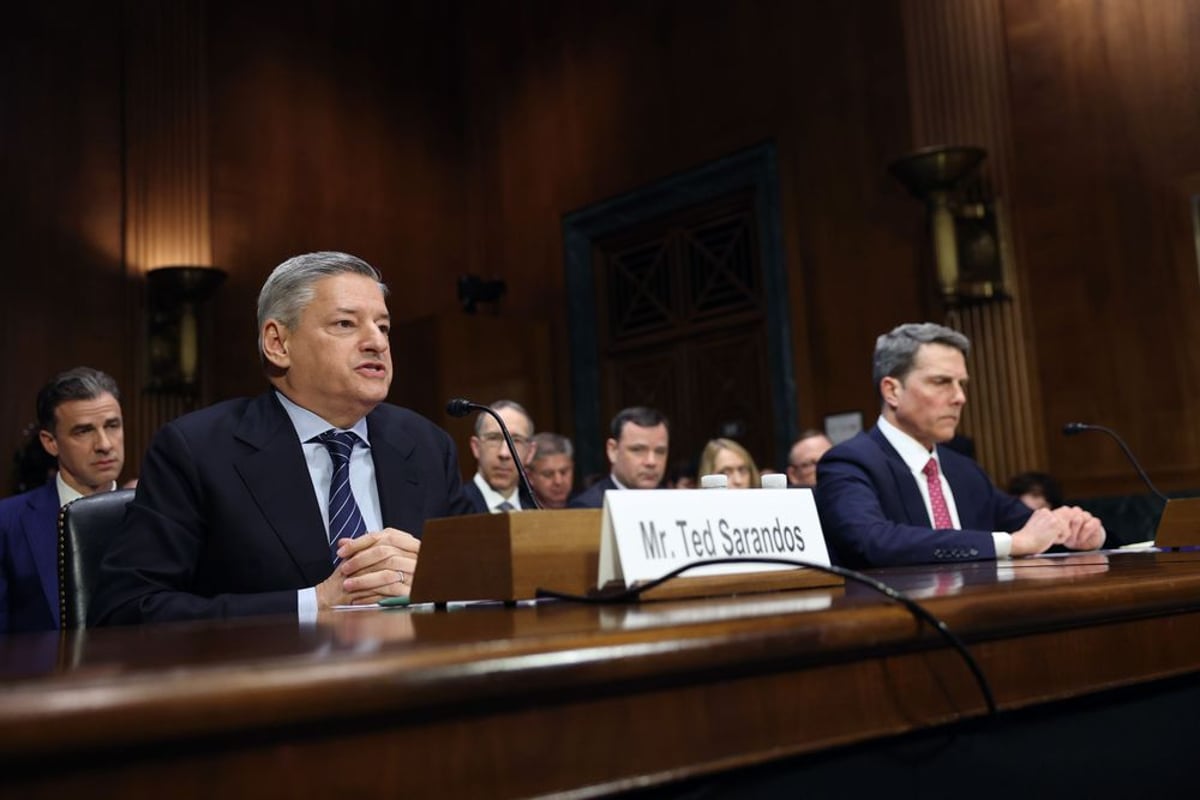
Netflix Co-CEO Ted Sarandos walked into a political minefield Tuesday, facing Senate grilling not just about the streaming giant's blockbuster bid for Warner Bros Discovery assets, but about transgender characters and alleged liberal bias in its programming. The Senate Judiciary antitrust subcommittee hearing devolved from traditional merger concerns into a full-blown culture war, with Republican senators questioning whether the company should be allowed to expand when it already produces what Sen. Eric Schmitt called "the wokest content in the history of the world."
Netflix thought it was showing up to defend a major media merger. Instead, Ted Sarandos got hauled into the latest front of America's culture wars.
The streaming giant's Co-CEO faced the Senate Judiciary antitrust subcommittee on Tuesday to discuss Netflix's attempt to acquire significant Warner Bros Discovery assets, according to The Verge. What should have been a straightforward antitrust hearing about market consolidation, consumer pricing, and theater distribution quickly morphed into a referendum on transgender representation and alleged political bias in entertainment.
Sen. Eric Schmitt (R-MO) set the tone early: "Why in the world would we give a seal of approval or a thumbs up to make you the largest behemoth on the planet related to content?" He went further, claiming Netflix had created "not only a monopoly of content, potentially, but the wokest content in the history of the world."
The attacks came from multiple angles. Sen. Josh Hawley (R-MO) pivoted abruptly from questions about union labor and streaming residuals to demand, "Why is it that so much of Netflix content for children promotes a transgender ideology?" Hawley claimed that "almost half" of Netflix's content for younger children promotes this agenda, a figure Sarandos said he didn't recognize. The CEO pushed back firmly: "Netflix has no political agenda of any kind."
But the allegations kept coming. Republicans pointed to the French film Cuties as evidence of oversexualized children's content, despite Sarandos noting the film was rated for mature audiences and created as commentary on the sexualization of young girls. GOP lawmakers cited Netflix employees' Democratic-leaning political donations and shows featuring LGBTQ+ characters as proof of institutional bias. The pressure campaign echoes Elon Musk's previous attacks on Netflix over programs like Dead End: Paranormal Park and The Baby-Sitters Club for including trans characters.
Sen. Ashley Moody (R-FL) argued the content questions were directly relevant to antitrust concerns. "If there are folks across America who are already struggling with their limited options, you're proposing you become even larger," she told Sarandos and Warner Bros Discovery Chief Revenue and Strategy Officer Bruce Campbell.
The political stakes got even messier with the revelation of a competing bid from Paramount Skydance. CEO David Ellison, son of Oracle co-founder and Trump ally Larry Ellison, declined to testify but met privately with lawmakers. Sen. Cory Booker (D-NJ) described the conversation as "fruitful," though WBD has already rejected Paramount's offer.
Here's where things get awkward for everyone involved. While Paramount's bid could raise similar antitrust concerns, David Ellison's family connection to Trump might ease Republican concerns about content, even as it raises red flags for Democrats. The dynamic creates a bizarre situation where merger review becomes entangled with political allegiances and culture war positioning.
Sen. Ted Cruz (R-TX) even brought the Grammys into the conversation, asking both executives if they'd watched the awards show (only Sarandos caught the "tail end"). Cruz then pointedly asked, "Are we right now on stolen land?" referencing artist Billie Eilish's speech opposing ICE. Neither executive knew how to answer. The Grammys aired on CBS, which is owned by Paramount Skydance, adding another layer of irony to Cruz's questioning.
Democrats, meanwhile, raised their own alarm bells about the process itself. Booker expressed "deep concerns" about whether any transaction would receive fair review from independent enforcers under the Trump administration. Sarandos admitted he'd met with Trump shortly before the deal announcement, though he insisted the acquisition wasn't discussed in detail and wasn't the meeting's primary purpose.
"I do not trust this administration in their evaluations, and I just pray to God that everything that you all hope might come should this move forward, that you all attested to, comes to pass," Booker said.
The hearing revealed how traditional antitrust review, which used to focus on market concentration, consumer harm, and competitive effects, now gets filtered through partisan political lenses. Both sides raised legitimate merger concerns: higher consumer costs, reduced theatrical distribution, fewer entertainment industry jobs. But those bread-and-butter issues got overshadowed by arguments about representation, ideology, and political access.
For Netflix, the path forward looks increasingly complicated. The company faces scrutiny not just on business grounds but on cultural and political ones, with Republican senators openly questioning whether it deserves to grow larger given its content choices. At the same time, Democratic concerns about Trump administration favoritism toward the Ellison family bid create their own obstacles.
The Warner Bros Discovery assets at stake represent a massive consolidation in streaming and entertainment production. But as Tuesday's hearing made clear, the deal's fate may hinge less on traditional antitrust analysis and more on which company's political connections and cultural positioning find favor in a deeply polarized Washington.
What started as an antitrust hearing about a major media merger turned into a proxy battle over culture, politics, and power in entertainment. Netflix's bid for Warner Bros Discovery assets now faces scrutiny that goes far beyond traditional merger analysis, with Republican senators attacking its content library and Democrats questioning whether Trump administration enforcers can fairly evaluate a deal where the competing bidder has deep family ties to the president. The outcome will signal whether media consolidation review in 2026 follows economic principles or political allegiances, and whether streaming giants can survive Washington's culture wars while trying to expand their empires.