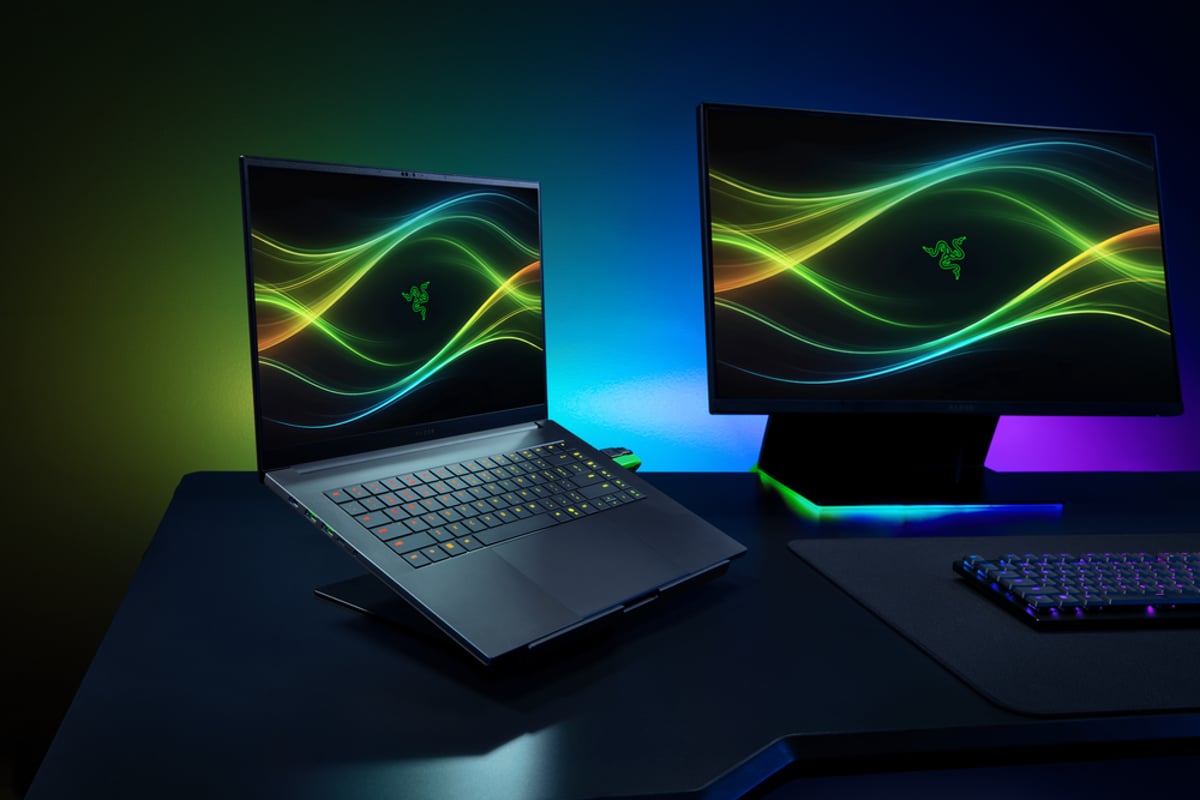
Razer just dropped its 2026 Blade 16 gaming laptop with a critical chip swap that signals Intel's comeback in the high-performance gaming market. The company ditched AMD processors in favor of Intel's new Core Ultra 9 386H "Panther Lake" chip, paired with faster RAM and Nvidia's RTX 50-series GPUs. Starting at $3,499 for the RTX 5080 configuration and topping out at $4,499 for the flagship RTX 5090 model, the refresh keeps last year's thin chassis while promising significant speed and battery improvements.
Razer is making a big bet on Intel's latest silicon. The gaming hardware maker just launched its refreshed Blade 16 laptop with Intel's Core Ultra 9 386H "Panther Lake" processor, marking a swift departure from the AMD-powered configuration it released just last year. The move hands Intel a high-profile design win in the premium gaming segment where AMD had been making inroads.
The new Blade 16 is available now directly from Razer with two configurations ready to ship. The base model at $3,499.99 packs an Nvidia RTX 5080 GPU, 32GB of RAM, and a 1TB SSD. Spring for the $4,499.99 flagship and you get the RTX 5090 with double the storage at 2TB. Both run the same Intel Core Ultra 9 386H chip paired with what Razer claims is significantly faster memory than previous generations.
The Panther Lake processor represents Intel's latest attempt to reclaim performance leadership in mobile computing after years of watching AMD chip away at its market share. By scoring the Blade 16 design, Intel gets its new architecture into one of gaming's most recognizable premium brands. It's a validation point the company needs as it fights to stay relevant against AMD's Ryzen momentum and Apple's M-series chips redefining what laptop processors can do.
Razer kept the industrial design unchanged from last year's model, maintaining the thin chassis that made the Blade 16 distinctive in a market where gaming laptops often resemble sci-fi props. The decision to prioritize internal upgrades over external redesign suggests Razer thinks the chip swap alone justifies a new model year - a notable vote of confidence in Panther Lake's capabilities.
The company claims battery and speed improvements over the 2025 AMD version, though it hasn't released specific benchmark numbers yet. That makes this partially a faith-based purchase for early adopters willing to trust Razer's performance promises. The faster RAM should deliver tangible benefits in memory-intensive gaming and content creation workloads, assuming the rest of the system doesn't bottleneck elsewhere.
Nvidia's RTX 50-series GPUs return as the graphics muscle, giving buyers access to the latest ray tracing and AI-powered upscaling tech. The RTX 5080 and 5090 options put this squarely in the high-end gaming category where buyers expect no compromises. But that top-tier performance comes at a steep price that'll put the Blade 16 out of reach for most gamers.
Razer's spec sheet mentions a third configuration coming later - an RTX 5070 Ti model that should arrive at a lower price point. No timeline or pricing details yet, but it'll likely fill the gap between $3,500 and the entry price of whatever Razer considers affordable. That delayed launch suggests either supply constraints or a deliberate strategy to capture early adopter dollars before expanding availability.
The quick pivot from AMD to Intel raises questions about Razer's chip strategy. Gaming laptop makers typically stick with processor partners for multiple generations to amortize development costs and build supply relationships. Switching annually suggests either AMD couldn't deliver what Razer needed for 2026, or Intel made an offer Razer couldn't refuse. Either scenario reveals how fierce the competition has become in mobile processors.
For Intel, this launch provides crucial ammunition in its pitch to other PC makers. If Panther Lake can deliver in Razer's demanding gaming workloads, it strengthens Intel's case across the laptop market. For Razer, the bet is that Intel's new chip offers enough of a performance jump to justify both the switch and the premium pricing in an increasingly crowded gaming laptop market.
Razer's Blade 16 refresh is really a referendum on Intel's Panther Lake architecture. By abandoning AMD after just one generation, Razer is signaling it sees something compelling in Intel's latest mobile chip - or at least believes gamers will. The $3,500 to $4,500 pricing puts this firmly in flagship territory where performance expectations run high and buyers won't forgive compromises. Intel gets a marquee design win it desperately needs, while Razer gets first-mover advantage with new silicon that could differentiate its laptop in a crowded market. Whether Panther Lake delivers on that promise will determine if this partnership lasts longer than the AMD experiment did.