WIRED just dropped its definitive 2025 printer buying guide, and the verdict is clear: if you're shopping for a new printer this year, skip the cartridge headaches and go straight for ink tank models. The publication tested everything from budget inkjets to enterprise lasers, delivering practical advice that cuts through the marketing noise in a surprisingly stagnant tech category.
The printer market might be the tech world's most boring battleground, but WIRED's latest buying guide reveals some genuinely useful shifts happening in 2025. Their comprehensive testing shows ink tank printers have essentially won the home printing wars, while laser technology continues dominating offices despite higher upfront costs.
The guide's most practical insight centers on economics that most buyers completely miss. While a typical $20 ink cartridge delivers around 200 pages, a $60 laser toner cartridge can print 2000 pages - making laser printers roughly 67% cheaper per page despite costing more initially. "Where a $20 ink cartridge might print 200 pages, a $60 toner cartridge could print 2000," WIRED's Brad Bourque writes, breaking down math that printer manufacturers definitely don't want you calculating.
But there's a critical compatibility issue that trips up many laser printer buyers. The heat-fusing process that makes laser printing fast and economical also creates restrictions around paper types. Anyone regularly printing on photo paper or windowed envelopes needs to stick with inkjet technology or switch to thermally safe alternatives, which can get expensive quickly for high-volume users.
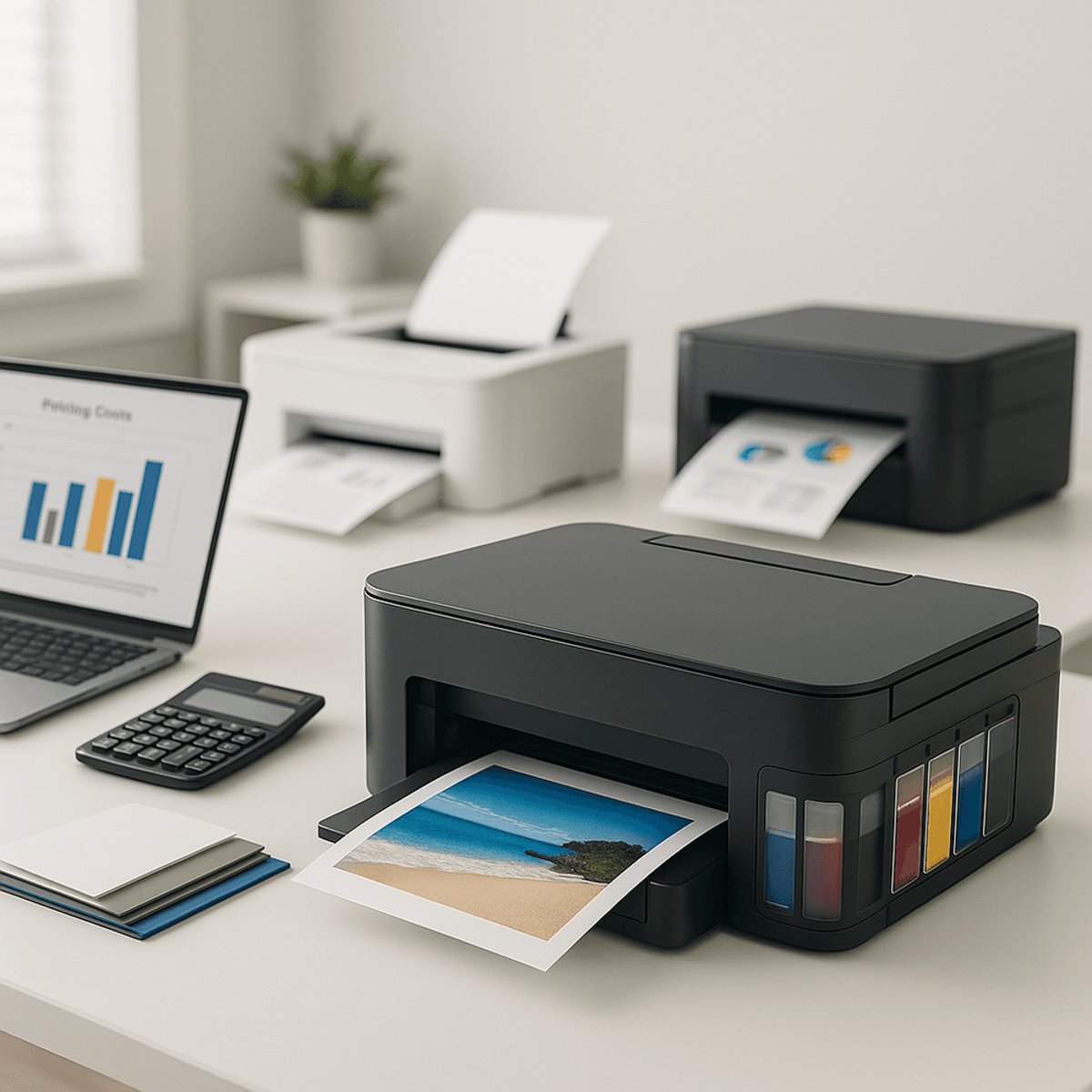
The ink tank revolution represents the biggest shift in consumer printing since laser technology arrived decades ago. These printers eliminate the cartridge replacement cycle entirely, requiring users to manually refill built-in reservoirs with liquid ink. WIRED's testing found this approach delivers "better pricing, more convenience, and a massive reduction in wasted plastic" compared to traditional cartridge systems.
There are trade-offs, though. Ink tank printers require more maintenance attention since users need to monitor ink levels manually and keep tanks topped off. They also need stable placement on flat surfaces to prevent leaks - not exactly a deal-breaker for most home setups, but worth considering if you're tight on space.
The guide also highlights thermal printers as an emerging category for specific use cases. These devices apply heat to special paper in precise patterns, creating shipping labels and simple stickers without any ink at all. For the growing number of people running small businesses from home, thermal printers can eliminate both ink costs and time spent managing complicated print settings.
WIRED's printer testing comes at an interesting moment for the category. While most consumer tech races toward ever-faster innovation cycles, printers have remained remarkably stable. The core technologies - inkjet, laser, and thermal - haven't fundamentally changed in years. Instead, improvements focus on cost optimization, environmental impact, and user experience refinements.
The publication's recommendation hierarchy is straightforward: laser printers for users whose budgets and paper types support them, ink tank models for everyone else, and thermal printers for specific business applications. It's refreshingly practical advice in a category often clouded by confusing specifications and marketing claims.
For manufacturers like Brother and HP, the guide's ink tank endorsement reflects broader industry trends. Both companies have significantly expanded their tank-based lineups over the past two years, responding to consumer frustration with cartridge costs and environmental concerns about plastic waste.
WIRED's 2025 printer guide cuts through industry confusion with clear, math-based recommendations that prioritize long-term economics over flashy features. Their ink tank endorsement reflects a genuine shift toward sustainability and cost efficiency that benefits consumers while challenging traditional printer business models built on expensive cartridge replacements. For anyone shopping for a printer this year, the advice is simple: do the math on per-page costs and choose accordingly.